Mixing Low End in a Small Room: Kick, Bass and Translation
This guide shows how to make reliable low-end decisions in an untreated or lightly treated room, using mono discipline, harmonics, analyzers and headphones to cross-check what your speakers cannot show.
By Delia Marchbanks, in Mixing
Low end is where most home mixes fall apart. The kick sounds huge in the studio and vanishes in the car. The bass is solid on headphones and boomy on a friend's speakers. These problems rarely come from a lack of skill. They come from the room, which distorts bass more than any other part of the spectrum, and from small speakers that cannot reproduce the lowest octave at all.
This guide explains why the room misleads you, how to set up a mix so the low end has a clear structure, and how to use several independent checks so decisions do not rely on a single, unreliable source.
Why Small Rooms Lie Below 200 Hz
Sound waves at low frequencies are long. At 50 Hz, the wavelength is close to 7 meters, larger than most home studio rooms. When a wave reflects off parallel walls, it adds to itself at some positions and cancels at others. These standing waves, or room modes, make certain notes boom and others nearly disappear, depending on where you sit.
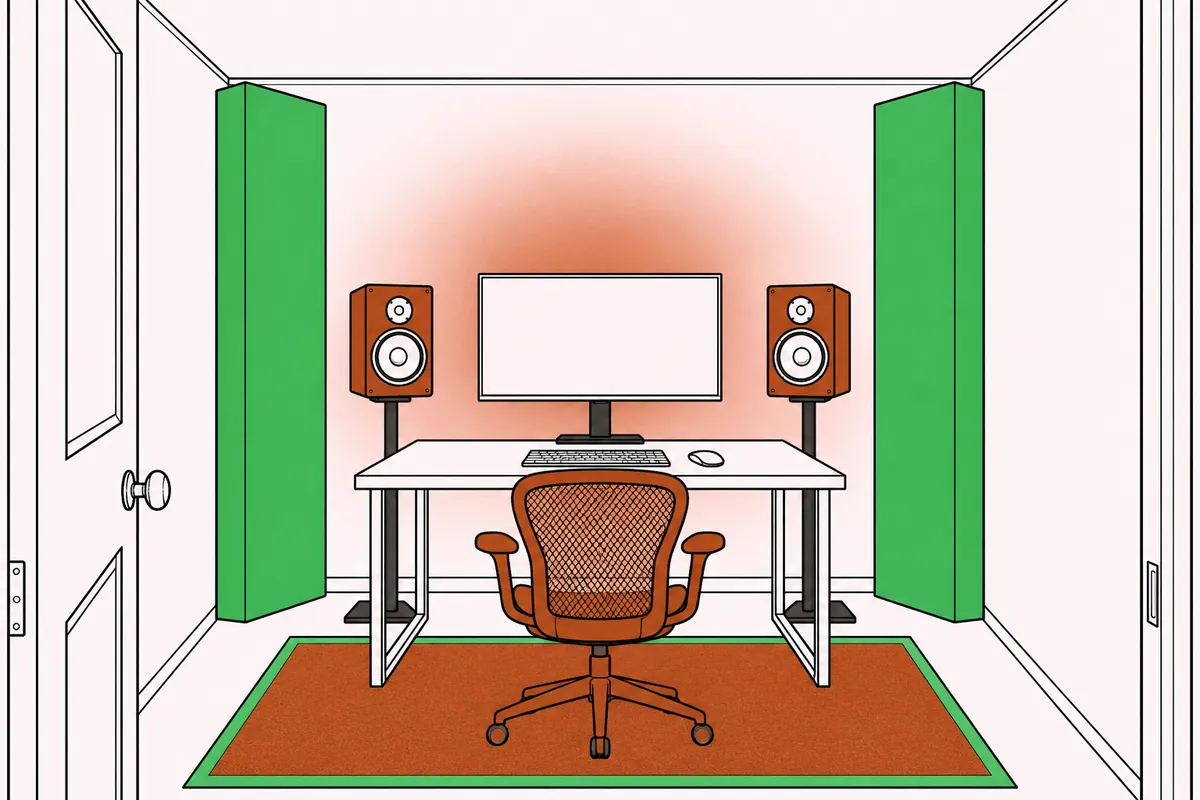
In a typical small room, peaks and dips of 10 to 20 dB below 200 Hz are common. Move your head 30 cm and the balance of bass notes can change. That is why you can mix a bass line that sounds even at your chair and has one note jumping out everywhere else.
Treatment helps. Thick bass traps in corners and a careful listening position reduce the worst problems. The guide on practical acoustics for a home studio covers placement, and the guide on placing your monitors explains how speaker distance from the front wall affects bass response. But even a treated small room is rarely flat in the low end, so the mixing method has to account for it.
Give the Low End a Clear Structure
A low end that is well organized survives bad rooms better than one that is merely loud.
Decide who owns the lowest octave
The kick and the bass compete for roughly 40 to 100 Hz. Pick an owner for each section of the song:
- Kick-led: common in dance and hip hop. The kick carries the deep thump, the bass sits slightly higher or ducks around each hit.
- Bass-led: common in rock, funk and many ballads. The bass carries the sustained low notes; the kick relies more on its attack and the 60 to 80 Hz punch.
Writing down this choice keeps the mix from drifting into two elements fighting at full size. The guide on mixing the kick drum explains tuning and EQ zones in more depth.
Use ducking and dynamic EQ
Light sidechain ducking on the bass, triggered by the kick, separates them in time. A reduction of 2 to 4 dB with a release around 80 to 150 ms is a common starting point. The guide on sidechain compression covers routing and settings.
Clean up everything else
Non-bass instruments do not need content below 80 to 120 Hz in most mixes. High-pass them, with the mix playing, so you keep the warmth that matters and remove rumble that would otherwise stack up under the kick and bass.
Keep the Bass in Mono
Below about 100 to 120 Hz, keep the mix in mono. There are three reasons:
- Low frequencies carry little directional information, so stereo bass adds no useful width.
- Out-of-phase bass between the left and right channels cancels when summed to mono, which happens on many club systems, phones and smart speakers.
- Wide bass shifts as you move your head, making small-room judgments even harder.
How to apply it:
- Check stereo synth basses and wide pads. Unison voices and chorus often spread the low end.
- Use a mono utility on the low band, or a mid-side EQ to reduce the side signal below 100 to 120 Hz.
- Keep stereo reverbs and wideners filtered above about 150 Hz.
The guide on stereo width and panning explains how to keep the upper range wide while the bottom stays centered.
Harmonics: Making Bass Audible on Small Speakers
Phone speakers, laptop speakers and many earbuds reproduce little or nothing below 100 to 150 Hz. A bass line with only a pure fundamental at 50 Hz simply disappears there.
The ear can still perceive a low note from its harmonics. If the bass carries energy at 100, 150 and 200 Hz, the listener infers the 50 Hz fundamental even when the speaker cannot reproduce it. This is often called the missing fundamental effect.
Ways to add harmonics:
- Saturation: gentle tape or tube-style saturation on the bass adds upper harmonics. Use a parallel blend or a mix knob for control.
- A mid bass layer: a filtered copy of the bass, high-passed around 150 Hz and distorted, blended low under the original.
- EQ in the 100 to 300 Hz range: a small lift can make the bass line more readable, but watch for mud.
- Choosing sounds: a sub sine is clean but invisible on small speakers. A slightly brighter patch often translates better.
For kick drums, the click around 2 to 5 kHz does the same job: it lets a listener hear the kick on devices that cannot reproduce its body.
Using an Analyzer Without Being Fooled
A spectrum analyzer shows what the room hides. It is particularly useful for:
- spotting energy below 30 Hz that eats headroom without being heard;
- comparing the relative level of the kick peak and the bass curve;
- checking whether some bass notes are much louder than others;
- comparing your low-end shape with a loudness-matched reference.
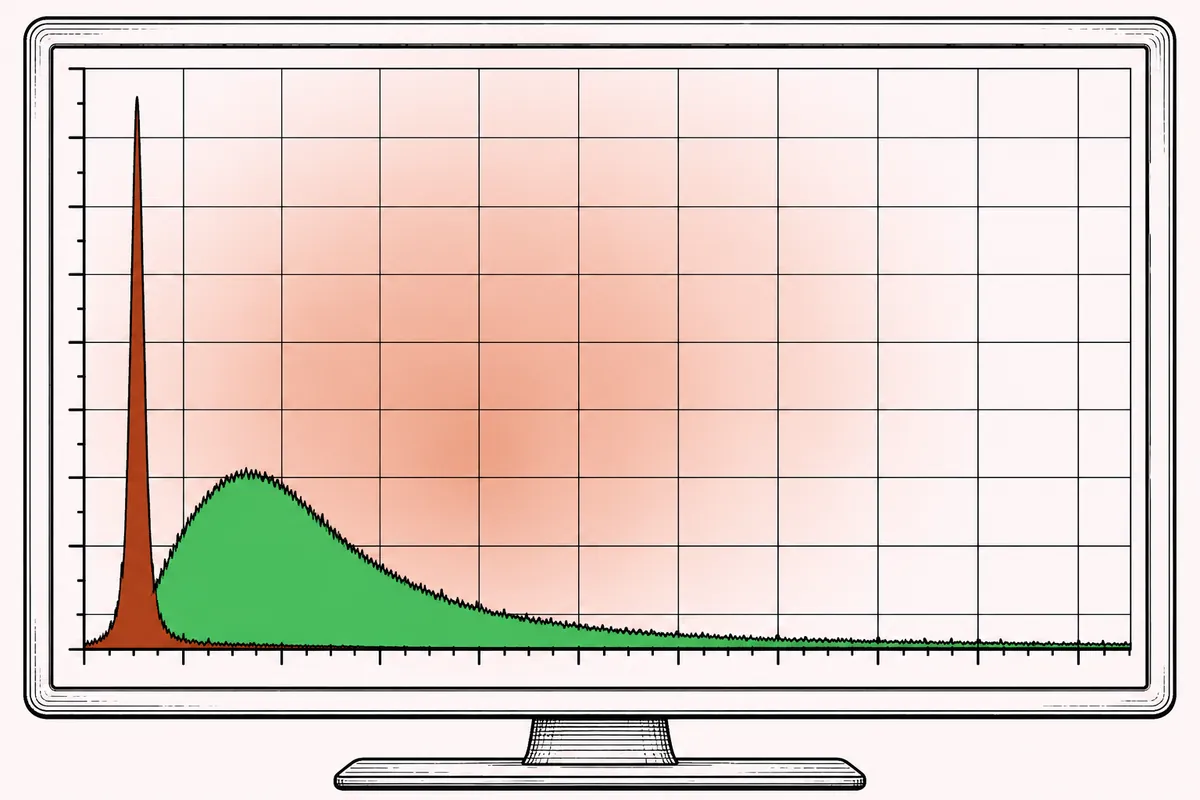
Settings that help:
| Setting | Starting value | Why |
|---|---|---|
| Resolution | High (8192 points or more) | Separates close low frequencies |
| Slope | 3-4.5 dB per octave | Makes a balanced mix read more evenly |
| Averaging | Slow or long-term | Shows the overall shape |
An analyzer cannot judge musical balance. Two mixes with the same curve can feel completely different. Use it to confirm suspicions and catch problems, then decide by listening on several systems.
Headphone and Other Cross-Checks
Headphones remove the room from the equation. Good closed or open-back models reproduce low frequencies far more evenly than a small untreated room, which makes them an excellent second opinion for bass.
- Check note-to-note consistency of the bass line on headphones. If one note jumps out there and not on speakers, the room is hiding it.
- Check sub content you cannot hear on small monitors.
- Remember that headphones can exaggerate or understate bass depending on fit and seal. Do not use them as the only reference.
The guide on mixing on headphones covers their limits in detail.
Additional checks:
- Car: strong low-end response, good for spotting boom in the 60 to 150 Hz range.
- Phone speaker: shows whether bass harmonics carry the line.
- Small Bluetooth speaker: shows midrange balance.
- Moving around the room: listen from the back corner or the doorway. Corners exaggerate bass, which can reveal buildup.
A Low-End Routine
- Set the kick and bass levels with the full mix playing, at a moderate volume.
- Decide who owns the lowest octave and apply light ducking or a complementary cut.
- High-pass non-bass elements in context.
- Make the bottom mono below about 100 to 120 Hz.
- Add harmonics until the bass reads on small speakers.
- Check on the analyzer and on headphones.
- Bounce and listen on two or three other systems, writing notes.
- Compare with a loudness-matched reference.
When the mix is finished, the self-review checklist helps confirm that the low end holds up alongside everything else.
Quick answers
Why does my bass sound different in every room?
Room modes create large peaks and dips below 200 Hz, and their positions depend on room dimensions and where you sit. Each room adds its own pattern, so cross-checks matter.
Can I mix low end on headphones only?
Headphones are reliable for bass consistency and sub content, but they do not show how bass feels on speakers. Use them alongside at least one speaker system.
Should bass be mono below a certain frequency?
Yes, keeping content below about 100 to 120 Hz in mono is a safe default. It avoids cancellation on mono playback and keeps the low end stable.
How do I make bass audible on phone speakers?
Add harmonics with saturation or a mid bass layer so the ear can infer the fundamental. A small lift in the 100 to 300 Hz range also helps, if it does not muddy the mix.