EQ for Electronic Music: Kick, Sub, Synths and the Air Band
By the end you will know where the kick and sub should sit, how to clear space for dense synths, how an air shelf adds openness without harshness, and which mastering EQ moves stay small and safe.
By Delia Marchbanks, in Mixing
Electronic music puts a lot of pressure on a narrow part of the spectrum. A four-on-the-floor kick, a sustained sub bass, a wide pad, a supersaw lead and a vocal chop can all live in the same eight bars, and most of them were designed in isolation to sound big on their own. EQ is how you decide which element owns which region, so the full arrangement sounds as clear as each part did when it was soloed in the synth.
This guide walks through the low end first, because that is where most electronic mixes win or lose, then moves up through the synth layers to the top octave, and finishes with the small adjustments that belong on the master bus. Every setting below is a starting point. Your monitors, your room and the sounds themselves decide the final values.
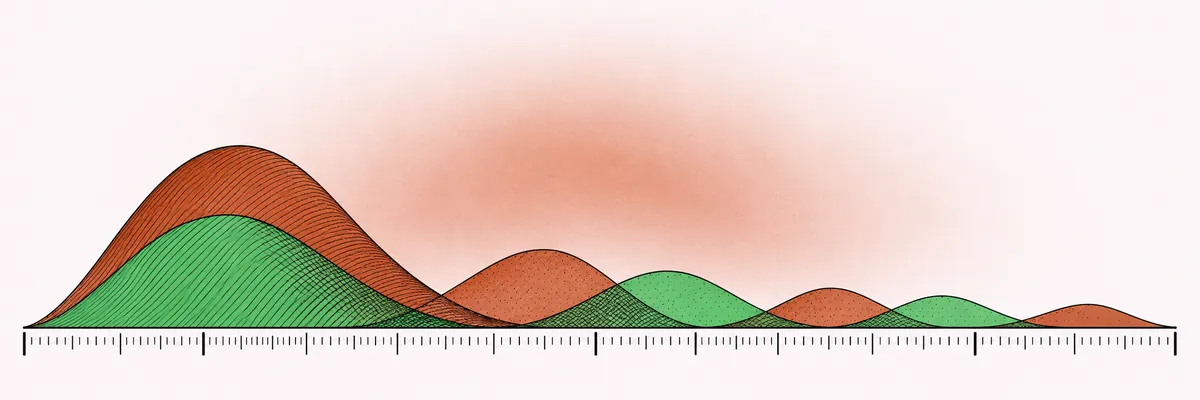
Start With the Kick and Sub Relationship
The kick and the sub bass compete for the same 40 to 100 Hz range. If both carry a strong fundamental at the same frequency and the same moment, they add up unevenly, eat headroom and blur each other. Pick a leader for the lowest octave in each section.
A common split looks like this:
| Element | Owns | Gives up |
|---|---|---|
| Kick | 50-70 Hz thump, 2-5 kHz click | Sustain under the bass |
| Sub bass | 35-60 Hz or 60-90 Hz body | The kick's attack window |
| Mid bass | 100-300 Hz harmonics | Deep sub energy |
Steps that work in most genres:
- Find the kick's fundamental. Sweep a narrow boost in the 40 to 90 Hz range on the kick, or read it on an analyzer. Note the frequency.
- Check the bass key. If the track sits in F, the low F is around 43.7 Hz and the next one up is around 87.3 Hz. A kick tuned near 55 Hz and a bass sitting at 43.7 Hz already separate somewhat.
- Tune or carve. If they collide, either retune the kick sample a few semitones, or cut 2-4 dB on the bass at the kick's fundamental with a medium Q. A dynamic EQ band keyed from the kick does the same job only when the kick hits.
- Use ducking for the rest. A short volume duck on the bass, triggered by the kick, often does more than static EQ. The sidechain compression guide covers the settings.
The deeper mechanics of punch, click and layering live in the guide on mixing the kick drum, and the broader picture of the bottom octave, including small-room problems, is in the guide on low end in a small-room mix.
High-Pass Discipline Without Thinning the Mix
Every synth, pad, vocal chop, riser and percussion loop carries some energy below 100 Hz that you rarely need. Stacked across twenty tracks, that rumble becomes a gray cloud under the kick and bass. A high-pass filter on each non-bass element cleans it up.
The mistake is to set every filter at 150 Hz by habit. A warm pad can need its 120 Hz region to feel full when the bass drops out in a breakdown. Use these habits instead:
- Set the cutoff while the whole arrangement plays, not while soloed.
- Raise the cutoff until the element starts to sound thinner in context, then back it down by about a third.
- Use 12 or 18 dB per octave slopes for musical parts and 24 dB per octave or steeper for FX, noise sweeps and room loops.
- Automate the cutoff for breakdowns. A pad that is filtered at 200 Hz during the drop can open to 80 Hz when the bass leaves.
Steep filters with high resonance add a bump just above the cutoff. On some synths that bump sounds good, on others it adds a boomy note that changes with every chord. Listen for it.
Carving Space for Dense Synth Layers
Modern synths are bright, wide and loud by design. Three of them playing together usually clash in the 200 to 500 Hz region (mud and boxiness) and again around 2 to 4 kHz (harshness and fatigue).
Give each layer a job
Before reaching for EQ, decide what each sound contributes. A pad offers width and harmony, a lead offers melody and presence, a pluck offers rhythm and attack. Once the job is clear, EQ follows: the pad can lose some 2 to 4 kHz presence, the lead keeps it, the pluck keeps its transient around 3 to 6 kHz but loses low mids.
Complementary cuts
When two parts fight, cut one where the other needs to speak. If the lead's character sits around 1.5 kHz, a 2 dB dip at 1.5 kHz on the pad, with a Q around 1, is often enough. Small, broad cuts on several tracks beat one deep notch on a single track.
Watch the low mids
The 250 to 400 Hz range builds up quickly in layered productions. Sweep a cut of 2-3 dB through that zone on the busiest pad or chord stack. If the mix suddenly sounds clearer and the pad still holds its warmth, keep it. The guide to common EQ mistakes explains why these decisions should be made with the whole mix playing.
Resonant synths
Some patches have one ringing frequency that jumps out on certain notes. A narrow dynamic EQ cut, set to react only when that resonance exceeds a threshold, tames it without dulling the patch on every other note.
The Air Band Shelf Explained
The top octave, roughly 10 to 20 kHz and above, holds very little musical fundamental. It carries breath, sheen, cymbal shimmer and the sense of space around a sound. A gentle high shelf in that region, often called an "air band," makes a source feel more open without making it sound harsher.
The approach is often associated with Maag-style EQs, which offer a dedicated top band with corner frequencies such as 10, 20 or 40 kHz. The principle applies to any equalizer that offers a broad, smooth high shelf.
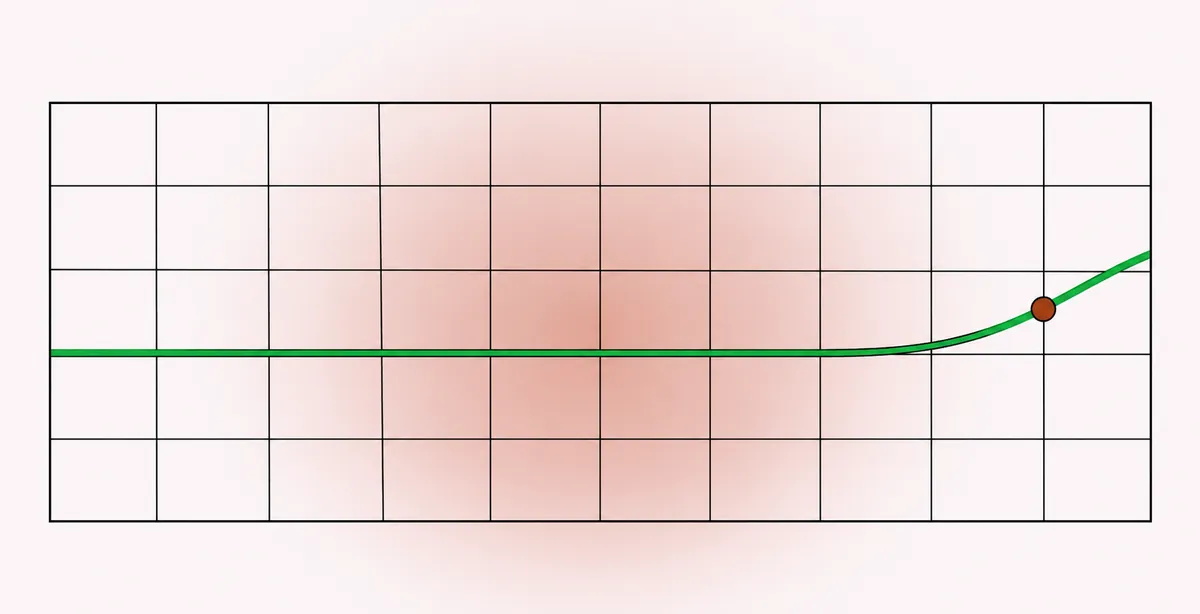
Why a high corner frequency matters
A shelf set at 20 kHz or even 40 kHz does not only lift frequencies above that point. A gentle shelf has a long slope, so a 40 kHz corner still raises 12 kHz a little, 16 kHz a bit more, and so on. The lift spreads smoothly across the top of the audible range instead of bumping one area. That is why a high corner can add sparkle without the spitty edge that a 6 kHz boost tends to bring.
Where it helps in electronic music
- Vocals and vocal chops: 2-4 dB of air above about 12 kHz adds breath and closeness. Apply it after de-essing, otherwise the sibilance comes up too.
- Pads and atmospheres: a light lift keeps them from feeling dull behind brighter leads.
- Hats and shakers: usually bright enough already. Leave them alone or reduce slightly to make room for vocal air.
- Mix bus: 0.5-1.5 dB of air can open the whole mix, but only once the top end of individual tracks is under control.
Where it hurts
Air also lifts noise, hiss from old samples, digital grit from bit-crushed sounds and harsh reverb tails. If the mix already has a lot of bright synths and cymbals, adding air on top pushes the mix toward fatigue. Check at a moderate listening level and for several minutes, because the ear adapts to brightness quickly.
Mastering EQ: Small Moves Only
Once a mix is balanced, mastering EQ is about tone and translation, not repair. If a move needs more than 2 dB, go back to the mix. The guide on mastering at home covers the full chain, but the EQ part follows a few patterns:
| Move | Typical amount | Purpose |
|---|---|---|
| Low shelf near 30-40 Hz cut | 0.5-1.5 dB | Remove subsonic energy and gain headroom |
| Broad dip at 250-400 Hz | 0.5-1 dB | Clear low-mid haze |
| Broad dip at 2-4 kHz | 0.5-1 dB | Soften harshness on loud playback |
| High shelf or air lift | 0.5-1.5 dB | Open the top end |
Use wide Q values, roughly 0.5 to 1, so the change sounds like a tone control rather than a filter. Always match loudness when you bypass the EQ, because even a 0.5 dB gain change can make the processed version seem better for the wrong reason.
Linear phase or minimum phase?
On a master bus, linear phase EQ avoids phase shift between frequency bands, which some engineers prefer for low shelves. It adds latency and can create pre-ringing on sharp transients, which shows up as a soft smear before kicks when cuts are steep. For broad, small moves, a regular minimum phase EQ is usually fine.
Keep the Low End Mono
Clubs and many large sound systems sum bass to mono, and vinyl cutting has strict limits on out-of-phase low frequencies. Even on headphones, a wide sub bass can feel unstable. A practical rule is to keep everything below about 100 to 120 Hz in mono.
- Use a mono-maker or the low band of a mid-side EQ to collapse the bass to the center below the chosen frequency.
- Check wide synth bass patches with stereo unison voices. Their low end often swirls when summed.
- Keep stereo effects such as chorus and wide reverbs filtered above about 150 Hz.
The guide to stereo width and panning explains how to keep the sides lively above that range without hurting mono compatibility.
A Simple Order of Work
- Set the kick and sub relationship first, with the drop playing.
- High-pass the non-bass elements in context.
- Carve the low mids and presence region on the densest layers.
- Add air where it helps, after de-essing and after harsh resonances are controlled.
- Check the mix in mono and at low volume.
- Bounce, rest your ears, then apply small mastering EQ moves with loudness-matched comparisons.
When you come back to a session after a break, run through the self-review checklist for your mix before you touch the master bus.
Quick answers
Should I cut the kick or the bass to make room?
Decide which element should own the lowest octave in that section. Most dance tracks let the sub own the deep body and the kick own its thump around 50 to 70 Hz, then use a short duck on the bass when the kick hits.
How much air band boost is too much?
On individual tracks, more than 4 dB is often too much, and on the master bus, more than 1.5 dB usually is. If cymbals and sibilance start to feel tiring after a few minutes, back it off.
Does a 40 kHz shelf do anything if I can't hear 40 kHz?
Yes. A gentle shelf has a long slope, so a 40 kHz corner still lifts the audible top octave by a smaller, smooth amount. The effect is a soft rise across 10 to 20 kHz.
What frequency should I make the bass mono below?
Around 100 to 120 Hz is a safe starting point. Some producers go as low as 80 Hz if their bass patch carries important stereo movement in the low mids.
Is EQ on the master bus a sign the mix is wrong?
Not if the moves are small. Broad adjustments under 1.5 dB are normal mastering choices. Larger corrections usually mean one track needs work in the mix.