How Remix Contests Work: Stems, Rules, Rights, Delivery and Judging
This guide follows a remix contest from the moment the stems are released to the announcement of a result, so you know what you agree to when you enter and how to hand in a remix that gets a fair listen.
By Delia Marchbanks, in Mixing
A remix contest is a simple idea on the surface. A label, an artist or a music platform releases the parts of a song, producers rebuild it in their own style, and one or more remixes are picked at the end. Underneath, every contest is also a contract. By downloading the stems and uploading a file you accept a set of rules about what you may do with the material, who owns the result and what happens to the entries that do not win.
This page walks through the whole cycle: what arrives in the stem pack, how the rules and rights usually work, how to deliver a file that sounds the way you meant it to, and how judging tends to be organized. This site does not organize contests, take entries or award anything. The aim is to help you read a contest page clearly before you spend weeks on it.
Who runs remix contests and why
Most contests are run by one of three kinds of organizer. Record labels use them to find new remixers and to give a release a second wave of attention. Artists run them to involve their audience, often around an album campaign. Contest platforms host many competitions at once and handle the uploads, the voting pages and the rules on behalf of the labels. Companies that make plugins, instruments or sample packs often join in as partners and add prizes; the reasons behind that are covered in the guide to who backs remix contests.
The organizer matters because it decides the terms. A contest hosted by the label that owns the master recording can actually release the winning remix. A contest run by a fan account with a song it does not own cannot promise anything at all.
What the stem pack contains
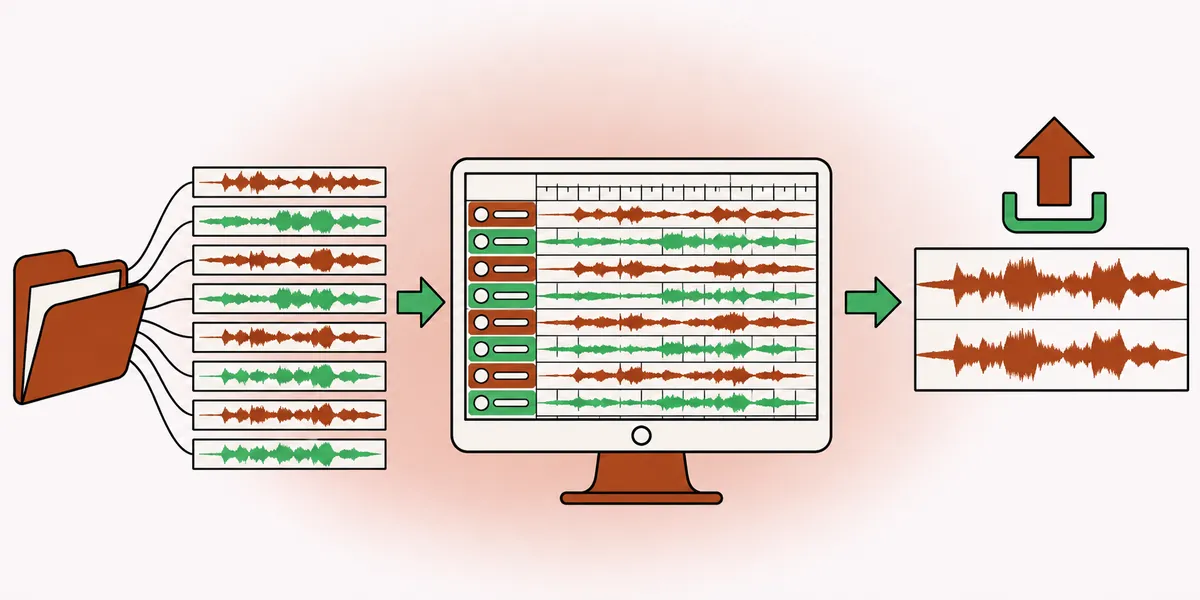
A stem pack is the song split into a few stereo files that all start at the same point and run the full length. A typical pack for a vocal track includes:
- Lead vocal, sometimes with a separate file for doubles or ad-libs.
- Backing vocals and harmonies.
- Drums, often split into kick, snare and the rest.
- Bass.
- Music, meaning the chords, pads and lead parts, sometimes split by instrument.
- Effects, such as risers, impacts and transitions.
- A note with the tempo and key, and occasionally MIDI files of the main parts.
Files usually arrive as WAV at 44.1 or 48 kHz and 24 bit. Before you start, check that every stem has the same length and that they line up when played together. If the vocal arrives with reverb printed on it, plan around it rather than fighting it. The guide to remixing from stems covers the technical side in detail: confirming tempo and key, warping cleanly and choosing which parts to keep.
The rules you accept when you enter
Every serious contest publishes official rules. They are long, and most entrants skip them, which is a mistake because the important points fit on one page of notes. Look for these sections.
Eligibility and dates
Age limits, the countries allowed to enter and the exact deadline, including the time zone. A deadline written as midnight in a time zone six hours behind yours is easy to miss. Some contests also exclude employees of the organizer and their families, or anyone signed to a competing label.
What the stems may be used for
Contest stems are almost always licensed for the contest only. You can use them to make and submit your entry. You cannot release the remix on streaming services, sell it, use the vocal in a different song or share the stems with someone outside a collaboration the rules allow. Some contests let you post a short preview on social accounts; others forbid any public posting before the result.
Who owns the remix
This is the section that deserves the slowest reading. Three patterns are common:
| Clause | What it means for you |
|---|---|
| Assignment of rights | The organizer owns your remix outright |
| Exclusive license | You keep the copyright, they control all use |
| Non-exclusive license | They may use it, you keep other rights |
Even when you keep the copyright, a remix of a song you do not own cannot be released without the owner's agreement, so a non-winning remix usually stays on your hard drive. Read whether the rights grant applies to every entry or only to the winners. A clause that takes rights in every submitted remix, forever, for no payment, is a reason to think twice.
Samples and originality
Most rules require that everything you add is your own work or cleared material. Royalty-free sample packs are normally fine, but check their license terms too. An uncleared sample from another record can disqualify an entry and can block a release even after a win.
Delivering the remix
Contest platforms usually ask for two things: a high-resolution file for the judges and a compressed preview for the public page. Common requirements are a 24 bit WAV at the same sample rate as the stems, plus a 320 kbps MP3. Follow the naming format exactly. A file called "final final v7" is easy to lose in a folder of a few thousand entries.
A few points that affect how the remix is heard:
- Loudness. Judges often play entries one after another. A remix mastered far louder than the others sounds impressive for a few seconds and tiring after a minute. A sensible target for most dance and pop styles is around -9 to -11 LUFS integrated with a true peak ceiling of about -1 dBTP. The guide to getting mixes louder explains how far you can push before the mix starts to suffer.
- Length. If the rules set a maximum, respect it. If they do not, a club remix can run longer than the original, but a long intro with nothing happening loses a listener who has many entries to get through.
- The first 30 seconds. Public pages often play a preview from the start. Get to something that defines your remix early.
- A clean ending. Fade-outs that cut off abruptly, clicks at the end of the file and silence padded on the end all sound careless.
Before uploading, play the final file on two or three systems and run through a structured review of your own mix, the same way you would for a release.
How entries are judged
Judging formats vary, but most contests combine two stages.
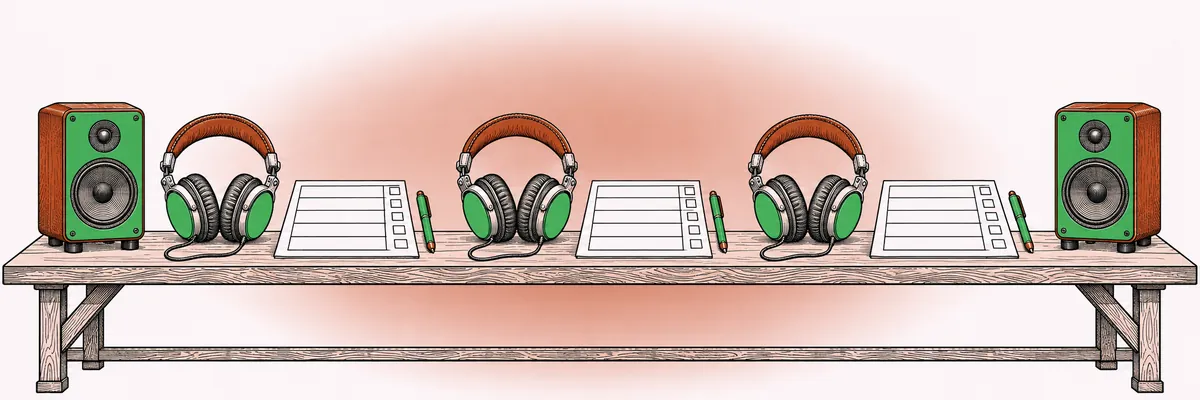
A public vote narrows the field. Listeners on the platform vote for their favorites, and the top entries move on. This rewards producers with a large audience as much as it rewards the best remix, and vote trading or bought votes are a known problem. Serious organizers say in the rules that they can remove suspicious votes and disqualify entries.
A jury decision picks the winner. The jury is usually the artist, people from the label and sometimes a guest producer. Common criteria are:
- Originality. A new arrangement and a new identity, not the original with a different drum loop.
- Respect for the song. The vocal sits well, its timing is clean and the lyrics are still clear.
- Production quality. A balanced mix, a controlled low end and a master that holds up on club speakers and on a phone.
- Fit. How well the remix suits the label or the artist's plans for a release.
Many contests let the jury pick any entry regardless of votes. Read whether the public vote decides the winner or only builds a shortlist.
After the result
If you win, expect a release agreement or a prize confirmation within the window the rules give, often a few days to respond. Answer quickly and read the agreement before you sign. If you do not win, the remix normally stays private. Some producers keep these as private examples of their work to send to labels, but posting a full non-winning remix publicly usually breaks the rules. What the different prizes are really worth is covered in the guide to remix contest prizes.
Quick answers
Can I upload my contest remix to a streaming service?
Not unless the rights holders sign it or give written permission. Contest stems are licensed for the contest, and a remix of a song you do not own cannot be released on your own.
Do I lose the rights to my remix by entering?
It depends on the rules. Some contests take an assignment of rights or an exclusive license in every entry, others only in the winners. Read that clause before you download the stems.
How loud should a contest entry be?
Loud enough to sit with commercial releases in the genre, without crushing the dynamics. Around -9 to -11 LUFS integrated with a true peak ceiling near -1 dBTP is a reasonable target for most club styles.
Should a contest ever charge an entry fee?
Most label and artist contests are free to enter. An entry fee is not always a scam, but it deserves a careful look at who runs the contest and what they can actually offer.